
Not sure which team fits?Talk to our engineers →
Lua Supply & Demand

Every shelf planned while the business sleeps.

For retailers, suppliers, distributors and restaurants. Every night, agents forecast demand and propose orders for every product in every location. Your team approves each order line in the morning.

  • Read-only. Lua never writes to your systems.
  • Live in six weeks. Your IT team sets up one read-only connection.
  • Test it for a month alongside your team before you sign.
01 · The problem

Too much stock, and empty shelves.

A business can hold more stock than it needs and still run out of what customers want. Both happen when stock is in the wrong place at the wrong time. Lua works on four causes.

StoresOne rule for every storeA slow store keeps the same minimum stock as a busy one, so stock sits where it does not sell.
DemandEmpty shelves look like low demandWhen a shelf is empty, nothing sells. That looks like low demand, so the next order is too small.
WarehousesWarehouses order without store plansThe warehouse orders without knowing what the stores will ask for.
SuppliersSuppliers take longer than agreedOrders use the agreed delivery time, not how long each supplier really takes.
02 · How a night works

One night, from tills to a morning report.

If data is missing, Lua proposes no orders that night. The report still arrives and says what is missing.

  1. Data arrivesLua reads a copy of the day’s sales, stock, orders and deliveries.
  2. Data is checkedDid all the data arrive? Did every location send its figures? Was it a normal trading day?
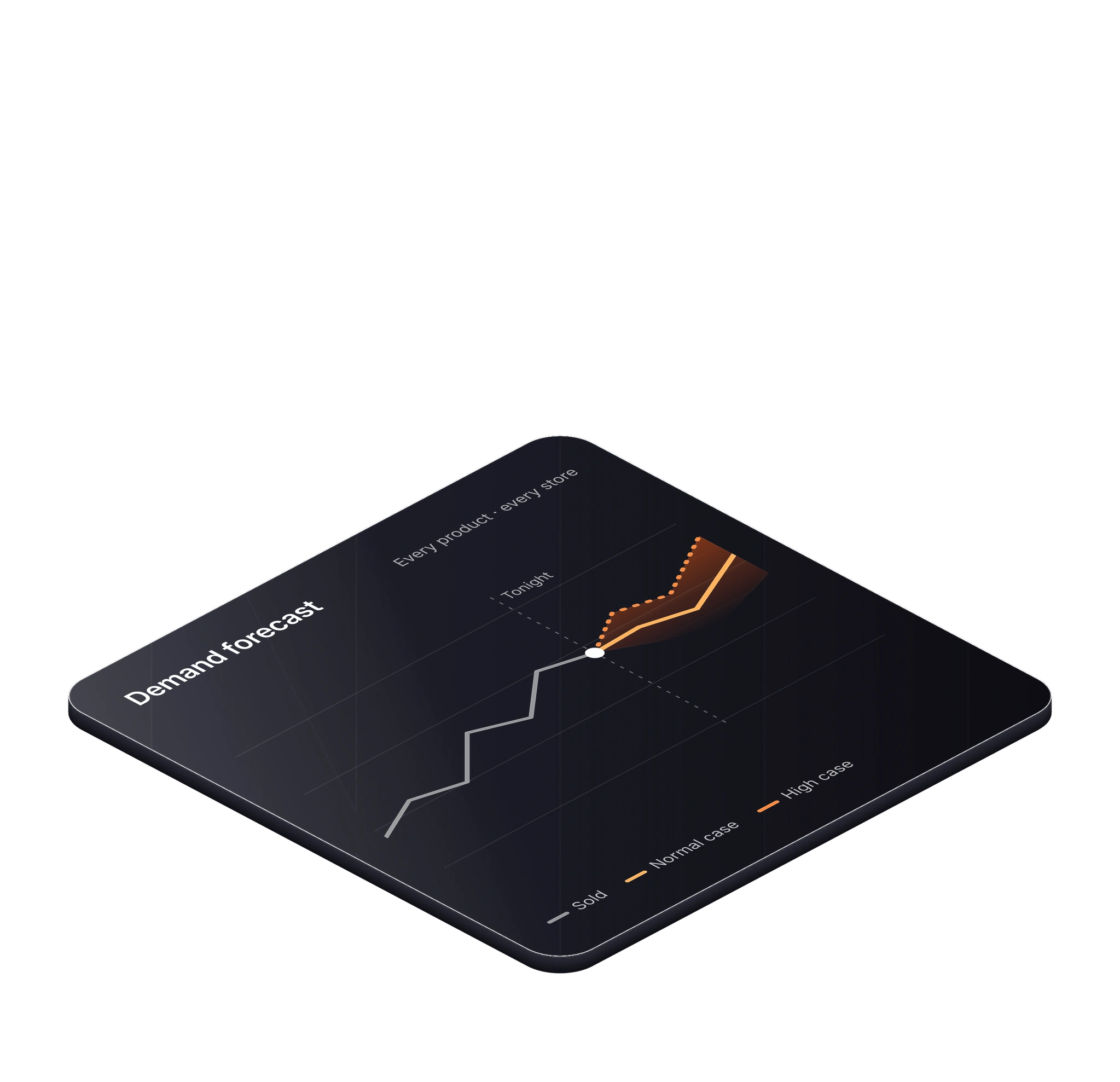
  3. ForecastTwo forecasts for every product in every location: a normal day and a busy day.
  4. Orders proposedLua proposes orders for each store, warehouse and supplier.
  5. Morning report readyA second check recounts the figures. Then the morning report and the Control Tower update.

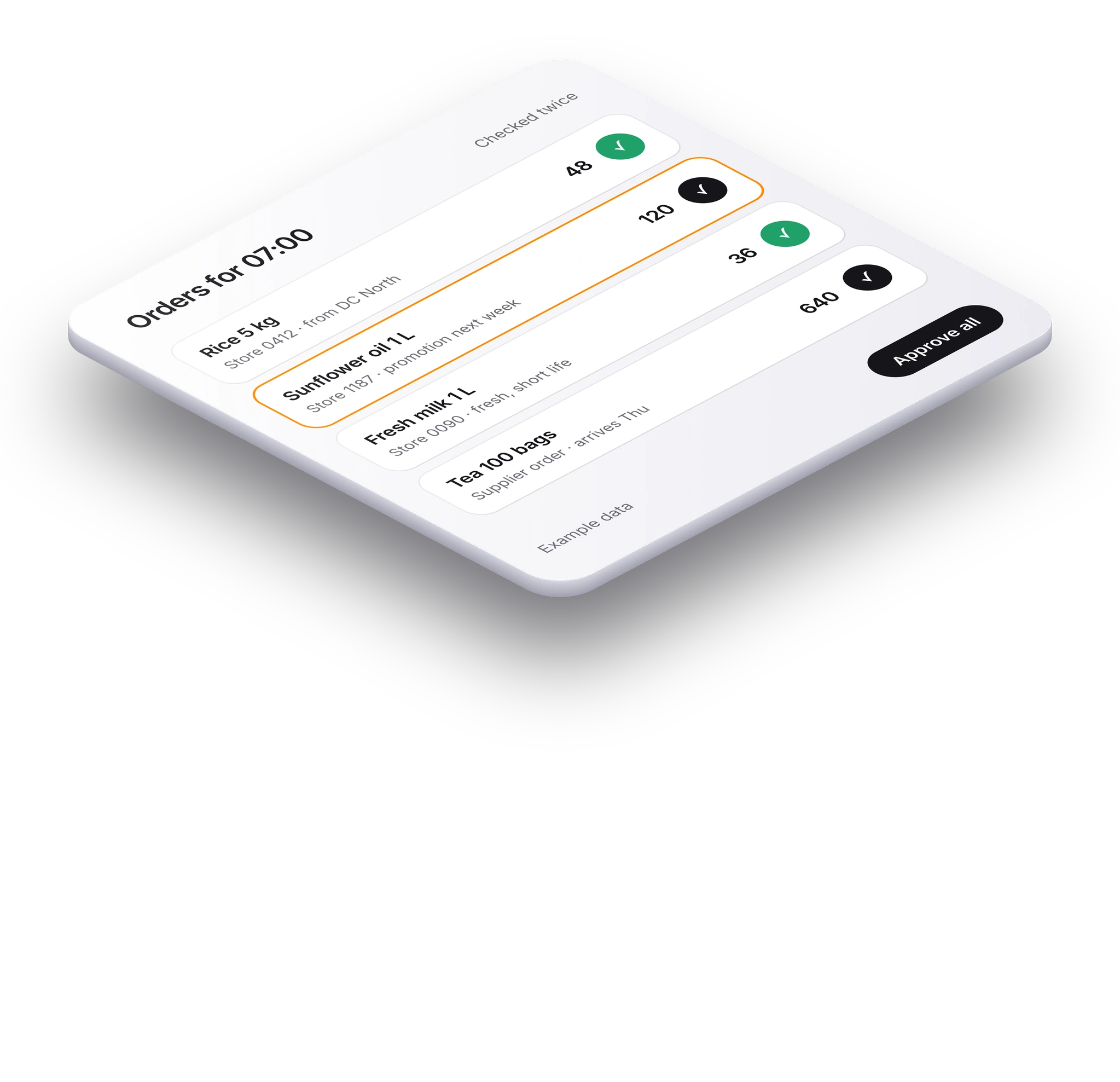
During the day, your team decides. Your planners and buyers review the proposed orders, approve them and place them in your own system.

03 · Who it is for

One agent team for the whole supply chain.

The same agents and nightly routine, set up for how each type of business buys and sells.

Retailers

Stores and warehouses.

For chains with many stores and central warehouses. Lua plans what each store gets from its warehouse and what each warehouse buys from each supplier. It covers long-life and fresh products.

Shelves full, with less stock sitting idle.
Suppliers and distributors

Plan from your customers’ orders.

Lua plans your warehouse orders the same way. It learns demand from your customers’ orders, and from their sales and stock if they share them.

Fewer surprises from your customers’ ordering.
Restaurants and fast food

From menu sales to ingredient orders.

Lua forecasts each menu item by day, time of day and channel (dine-in, takeaway, delivery). It turns this into ingredient orders using your recipes, sized to each ingredient’s shelf life.

Run out less often, and throw less away.
04 · What your team gets

Everything from tonight’s data to tomorrow’s orders.

DataData checked twiceLua checks the data when it arrives and recounts the figures before you see the orders.
ForecastDemand forecastA forecast for every product in every location that includes your promotions.
OrdersOrdersOrders for stores, warehouses and suppliers. Fresh products are ordered in amounts that sell before they expire.
ApprovalsCalendar and approvalsAn order calendar 30 days ahead. Each order line goes to a named person to approve. Lua follows up with suppliers.
SuppliersWorking with suppliersA scorecard of which suppliers deliver late or short. Each supplier gets a 30-day forecast to plan with.
RestaurantsIngredient orderingLua turns menu forecasts into ingredient orders using your recipes.
Every dayWhat your team usesA morning report. The Control Tower: one page with every order and its status. A chat that answers questions with checked numbers. Downloads.
AlwaysYour team decidesNo order is placed until a person approves it.
05 · Results

Replay test: ahead of the chain’s own planners on all three measures.

A discount grocery chain. Lua planned every product in 1,150 stores, every night, on the chain’s real trading days.

+2.2%more units sold from the same stores
4.8%less stock held each day
6.1%fewer empty shelves each day

Daily averages, 1 to 17 November 2026. We tested Lua’s orders against the chain’s real sales and stock on those days. No real orders were placed. Early results.

06 · What we need to start

Seven data sets,
read-only.

Lua only reads this data. It never writes anything back to your systems.

SalesDaily salesUnits sold for each product in each location, every day. We need 13 weeks to start. Two years is best.
StockStock on handHow much stock is in every store and warehouse now.
OrdersOpen ordersOrders you have placed that have not fully arrived.
HistoryPast orders12 months of orders, with what arrived and when.
ProductsProduct listYour products with pack sizes, so orders come in full packs.
LocationsStores and warehousesYour stores and warehouses, and which warehouse supplies which store.
SuppliersSupplier listWho supplies each product, and each supplier’s minimum order.
Works with
SAPMicrosoft Dynamics 365Oracle, including NetSuiteInforSageOdooRestaurant tillsSpreadsheets and files
Someone to approve accessA person at your company approves our access and can remove it at any time.
One task for your IT teamThey set up a read-only connection, or a secure place to send files. They do this once.
A time and a regionYou choose when Lua reads large amounts of data, and where your data is stored: the Middle East, Europe or the United States.
07 · Safe by design

Lua reads.
Your team decides.

Lua cannot change your systems. One switch stops everything at once.

Read-onlyLua never writes to your systems.
In your regionYour data stays where you choose.
Figures recountedA second check before every report.
Every night recordedWhat data and settings made each order.
One stop switchPauses everything at once.
08 · Questions

Common questions.

Do we have to replace our planning system?

No. Lua proposes orders. Your team approves them and places them in the system you already use.

Who decides what gets ordered?

Your team. Every order line goes to a named person, who approves, changes or rejects it.

How long until we see orders?

Six weeks from your first data to orders every morning. You can then run Lua alongside your team for a month before you sign.

What happens on a night with missing data?

Lua proposes no orders that night. The morning report still arrives and says exactly what is missing.

See it on your own data.

Lua reads one copy of your data each night and runs alongside your team for a month. Each morning we compare its orders with your team’s. Then you decide.