
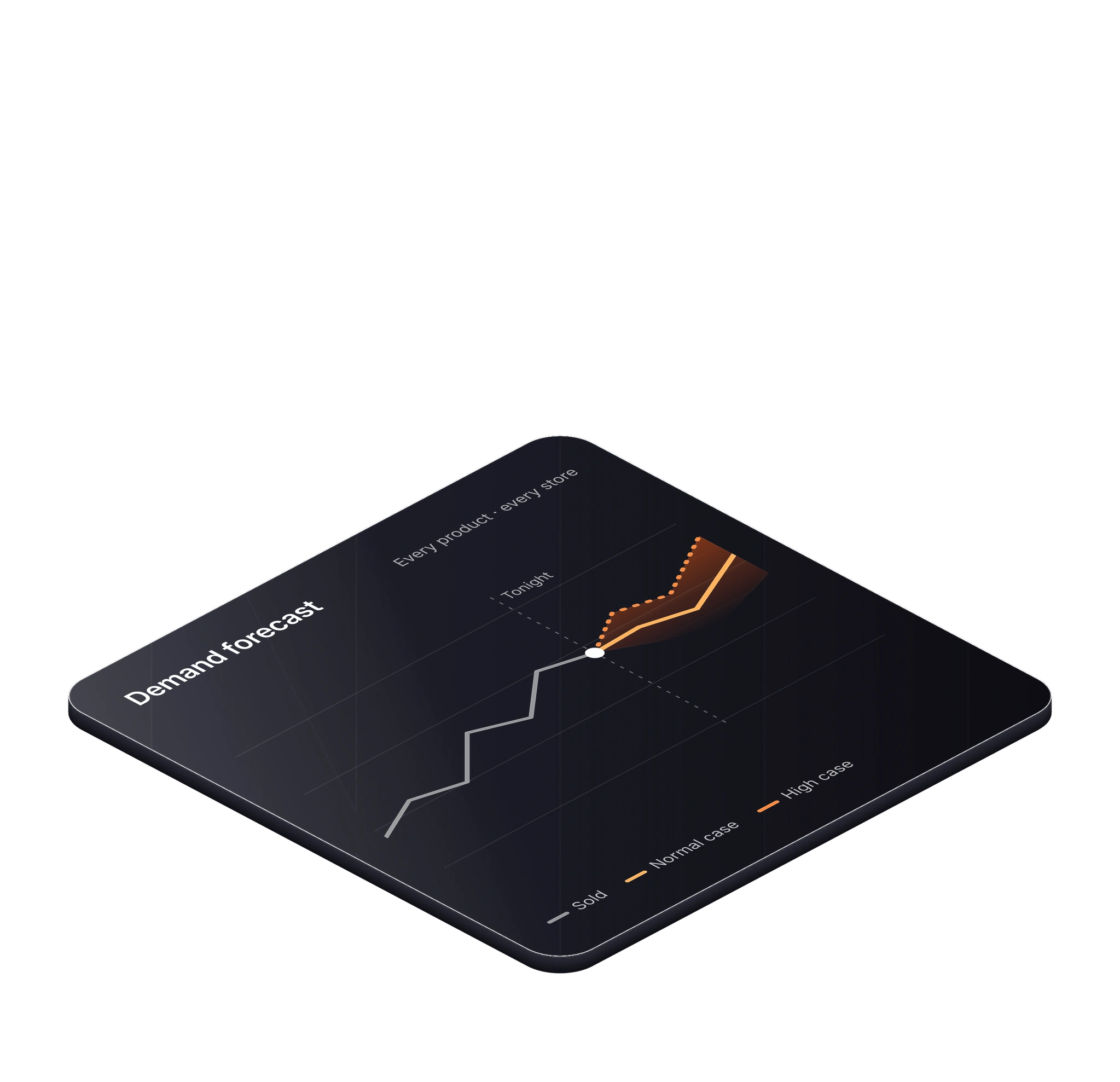
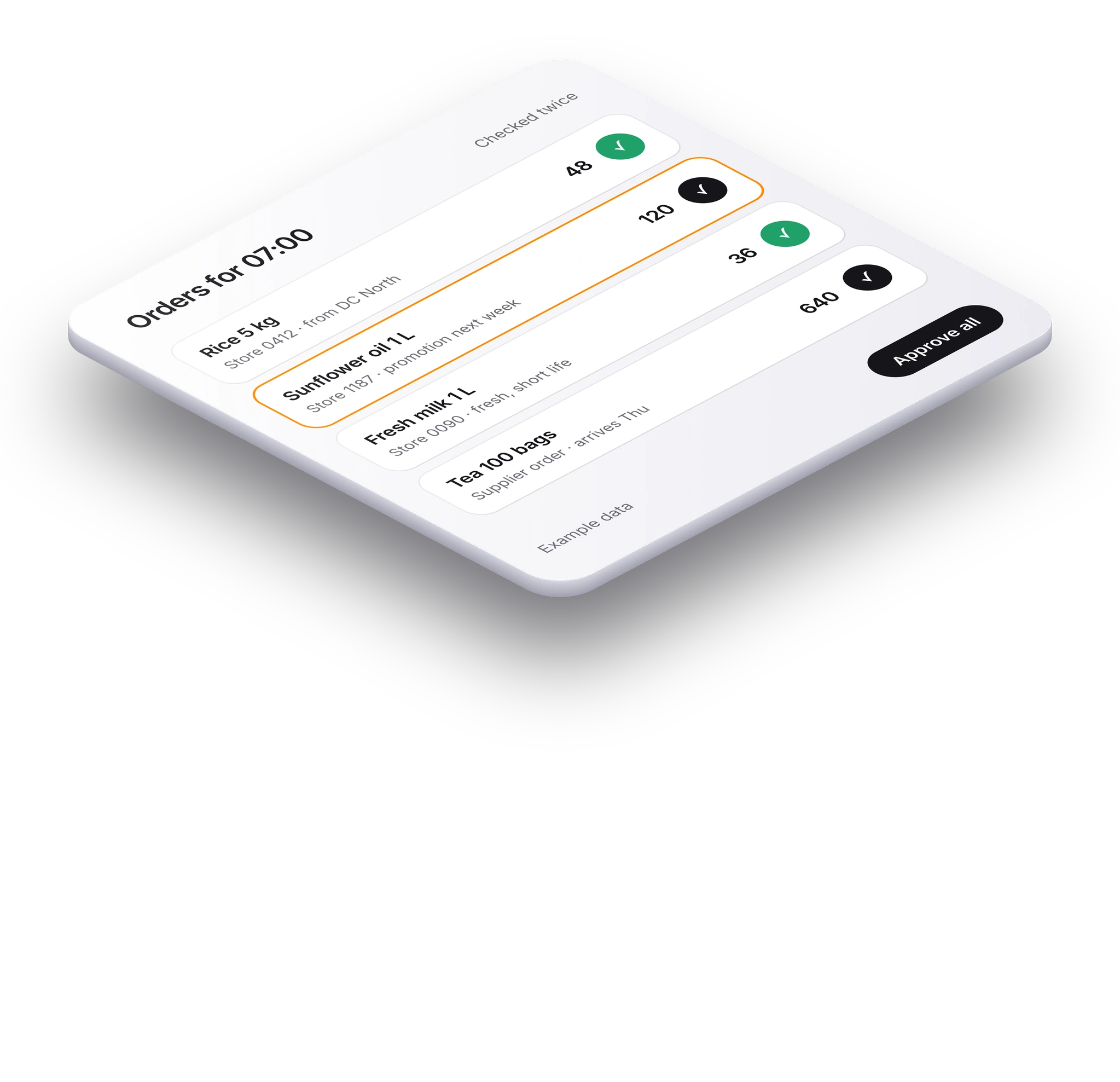
 New · Featured teamSupply & DemandEvery night, agents forecast demand and propose orders for every product in every location. Your team approves each line.See how it works
Not sure which team fits?Talk to our engineers →
New · Featured teamSupply & DemandEvery night, agents forecast demand and propose orders for every product in every location. Your team approves each line.See how it works
GoalTested fixes merged every week. People decide the risky ones.
An AI engineering team for the work your team never gets to. Agents find bugs and security gaps, write and review the fix, and answer questions in Slack, inside your own GitHub and Linear. Low-risk changes merge on their own. High-risk ones wait for you.
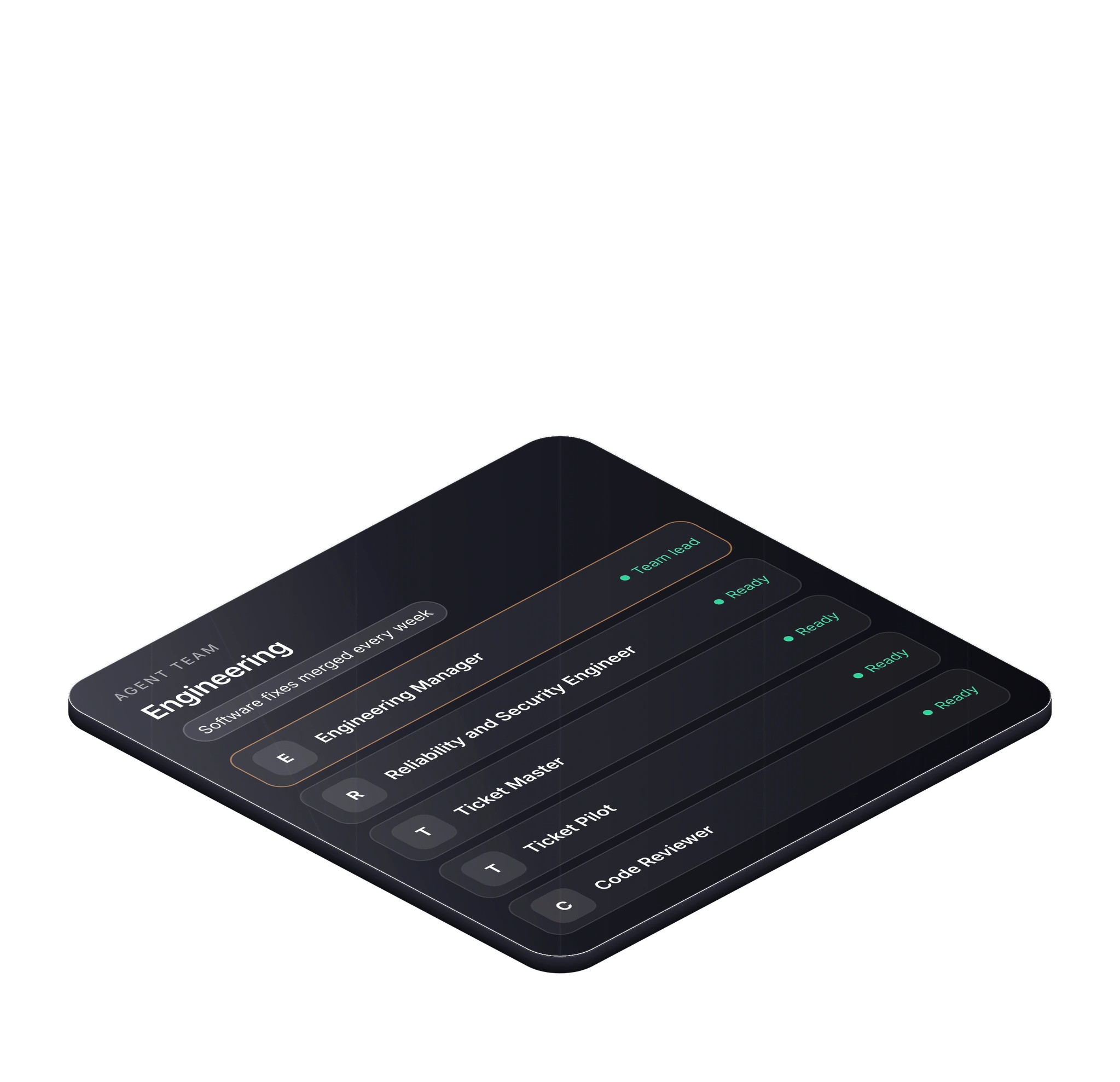
One lead agent keeps the team working towards the goal. Each other agent does one job, then passes the work on.
The goal: turn problems in the logs into tested, merged fixes. Example
Result. From finding to merged fix in under an hour. No one had to do any of it by hand.
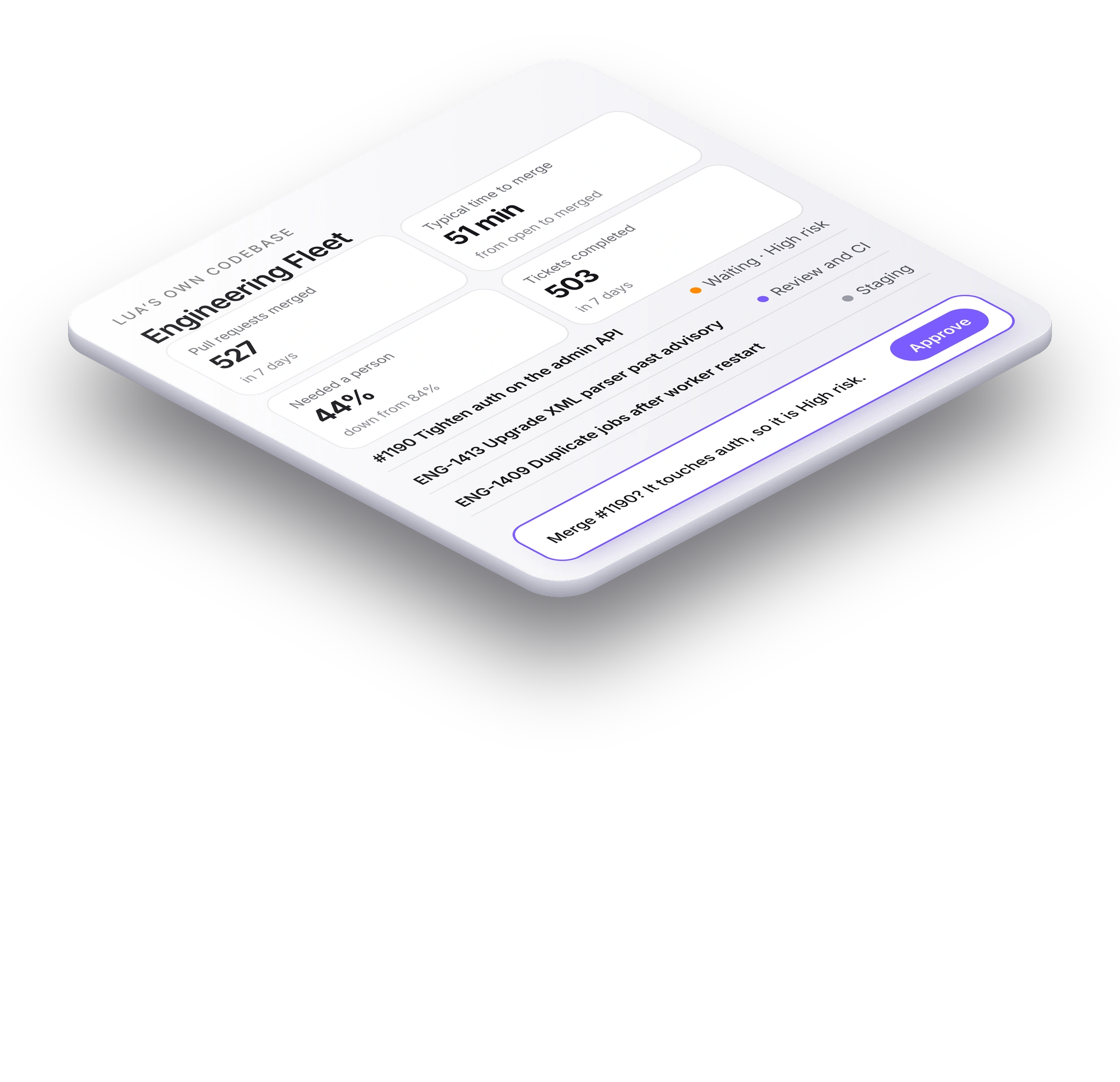
One page shows the team’s work: the numbers, the work in progress and what needs a person to approve.
These numbers come from Lua’s own code over 7 days. Tom and the tickets are examples.
Only at the risk levels you allow, and only after tests pass and the review approves. High-risk changes always wait for your team. You start with no automatic merges and add risk levels week by week.
Its own bot accounts on GitHub and Linear, added to your organisation. It never uses a person’s login.
Yes. The agents use Anthropic’s Claude models. Our contract does not allow your data to be used for training. Every provider we use is on our subprocessor list.
Talk to our engineers about joining the design partner beta.
Yes. Every team starts in practice mode on sample data. Nothing goes live until you approve it.
You can start building free in Workspace. Talk to our engineers if you want them to build it with you.
Describe the work in Workspace and Lua builds the team for you. Or our engineers can build it with you.